The phygital sculpture as a bridge between matter and augmented reality
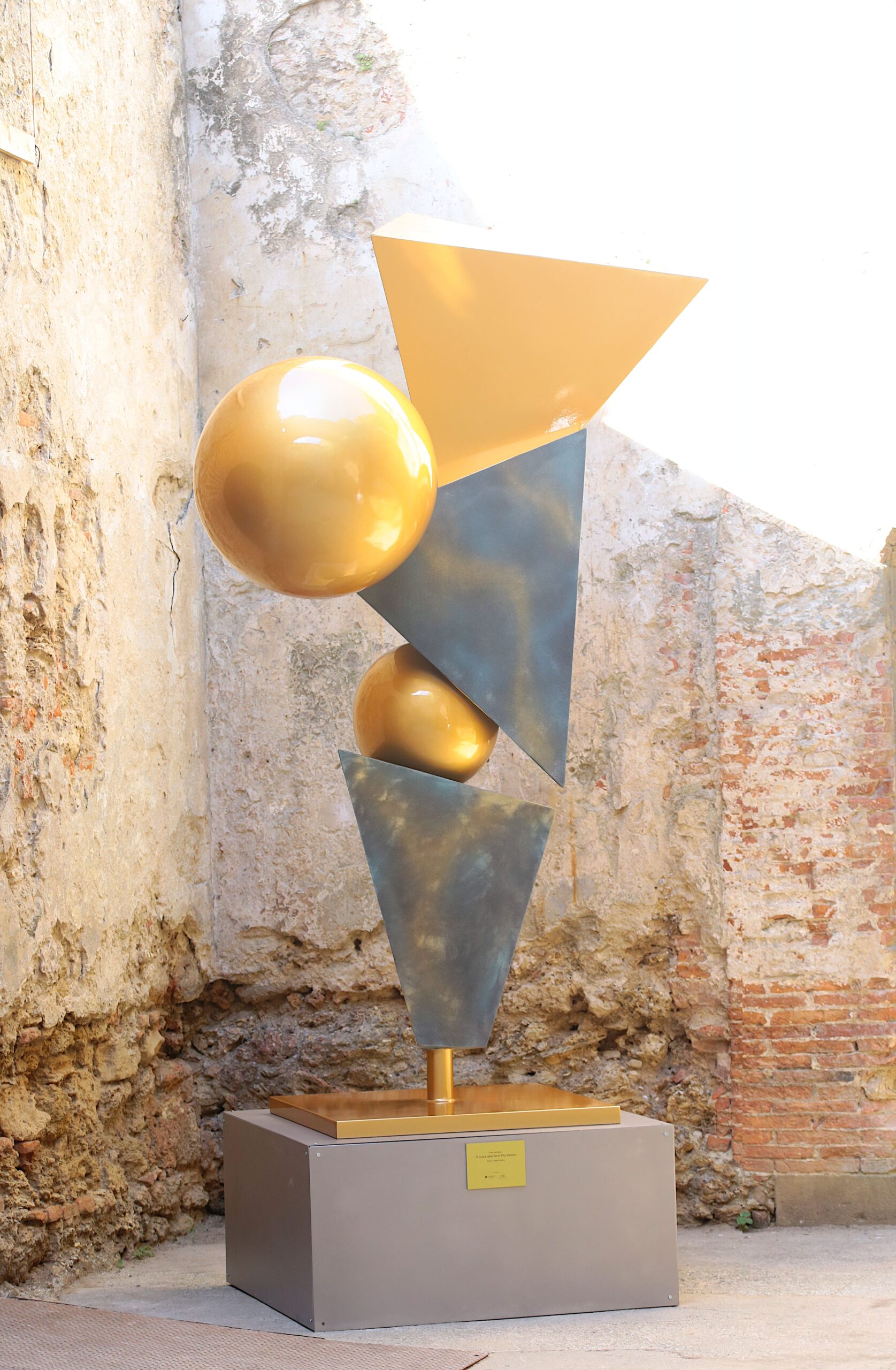
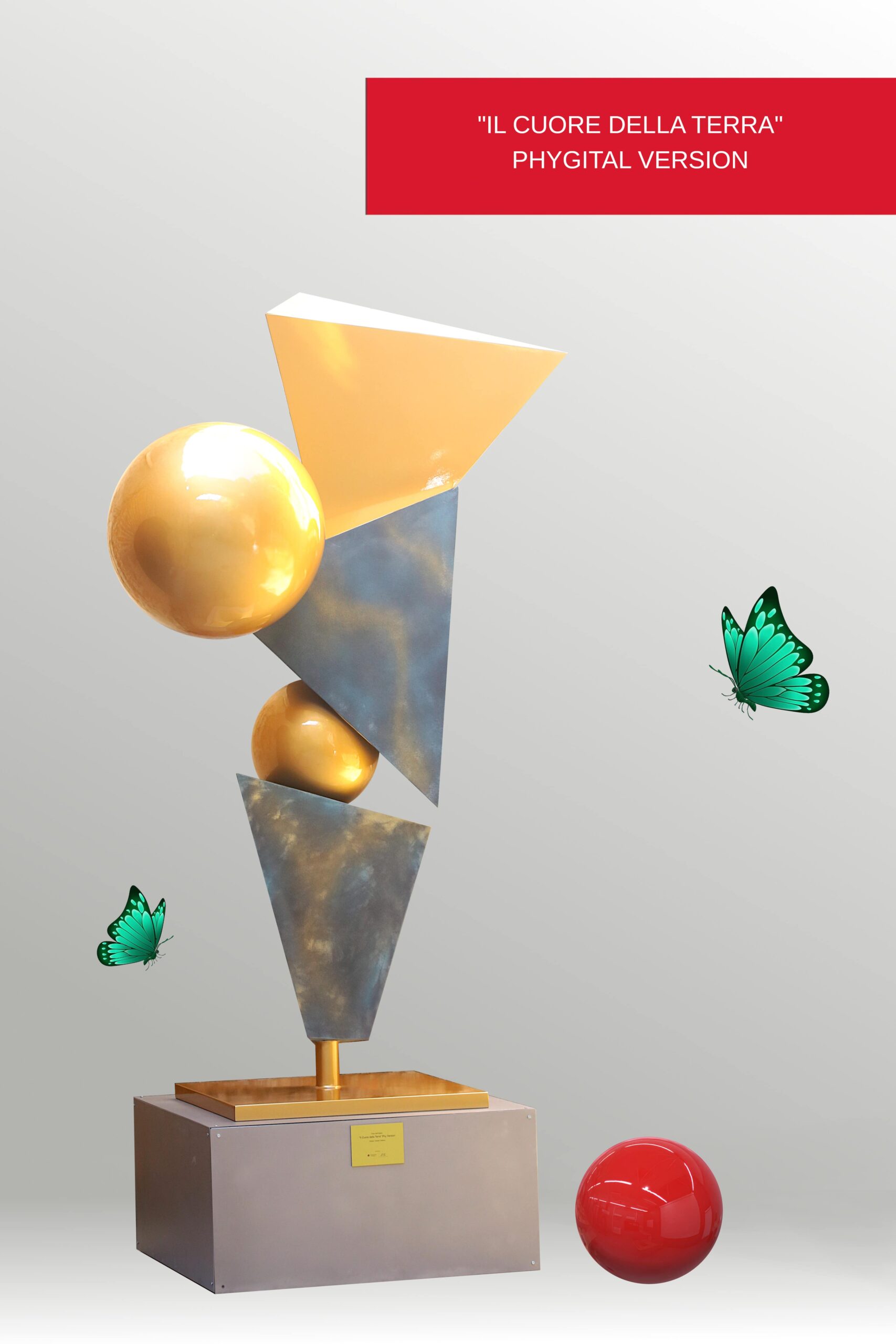
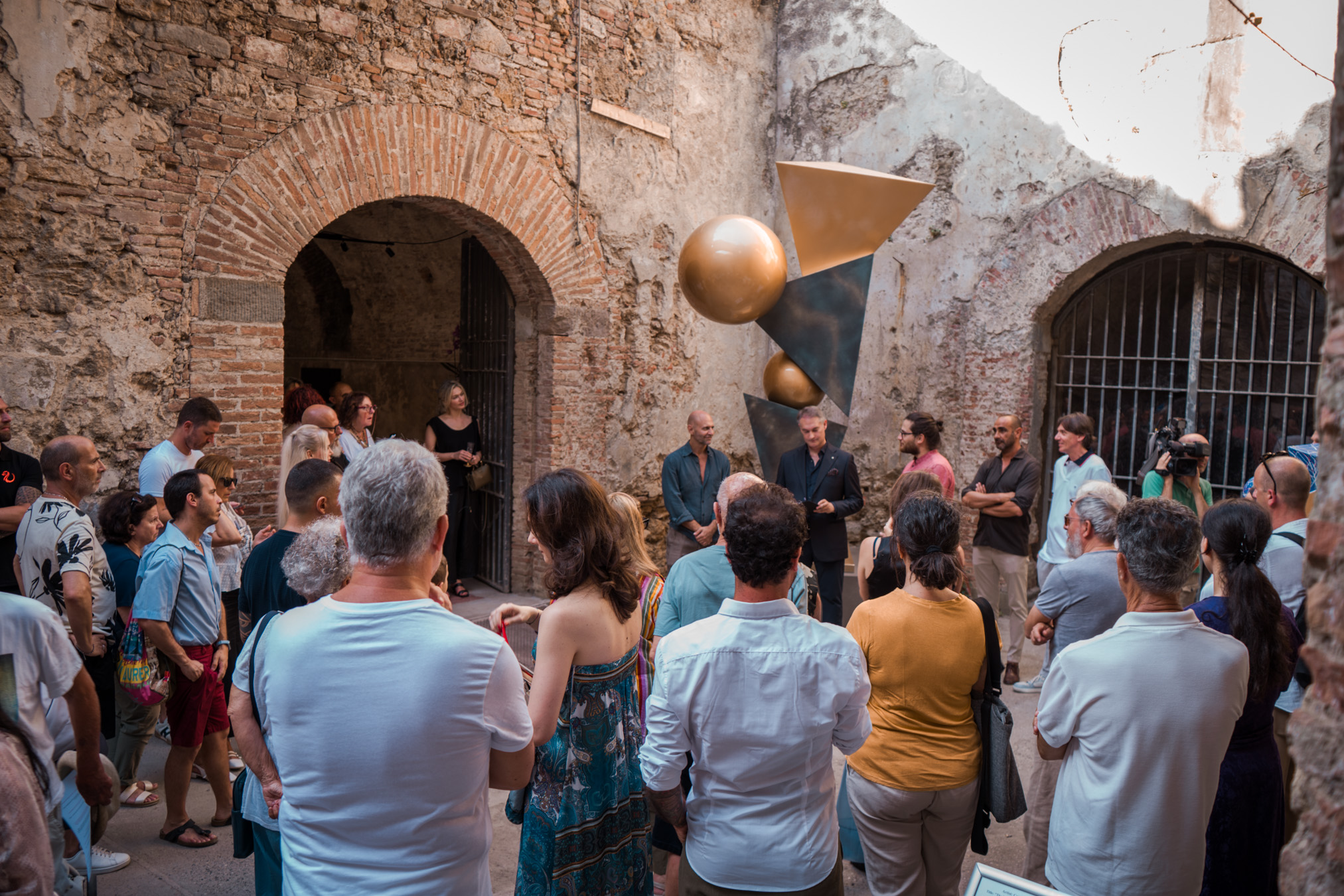
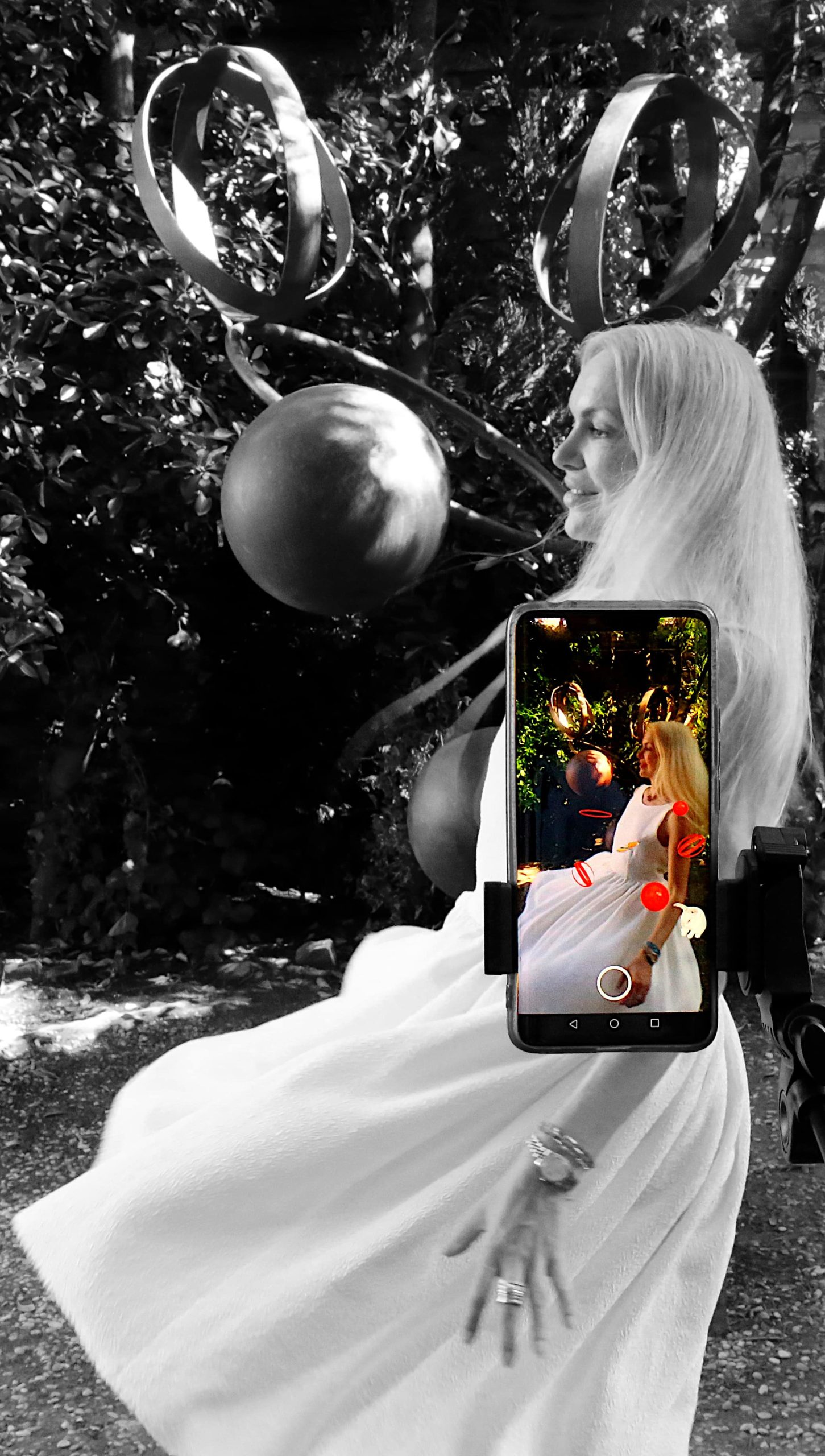
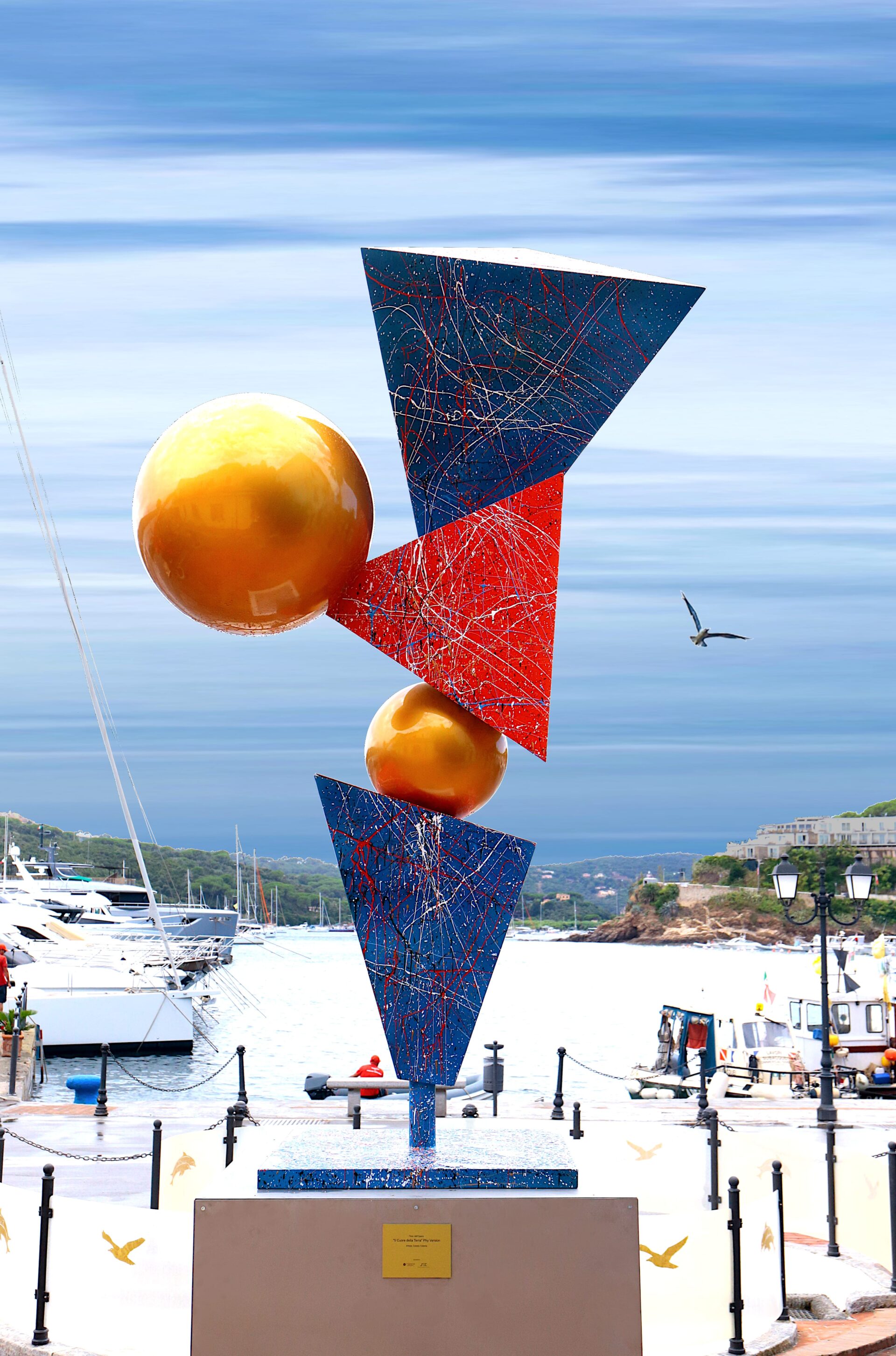
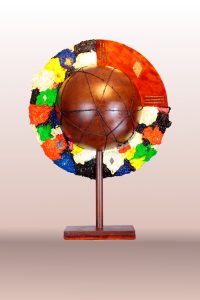
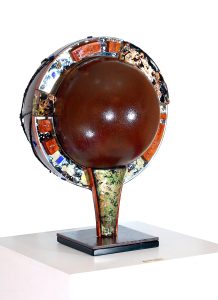
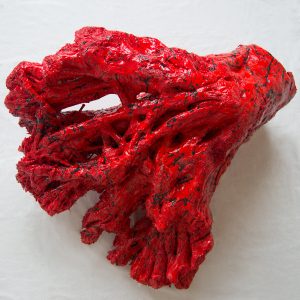
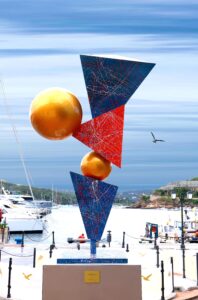
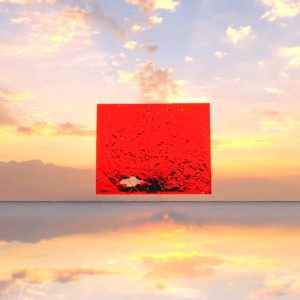
In the Phy Version of The Heart of the Earth, the balance between geometry and symbolism opens up to a new dimension: that of augmented reality. This monumental and phygital variant was created to merge the language of sculpture with that of technology, creating a hybrid, living work, in constant sensory expansion.
An unstable dance between forms and forces
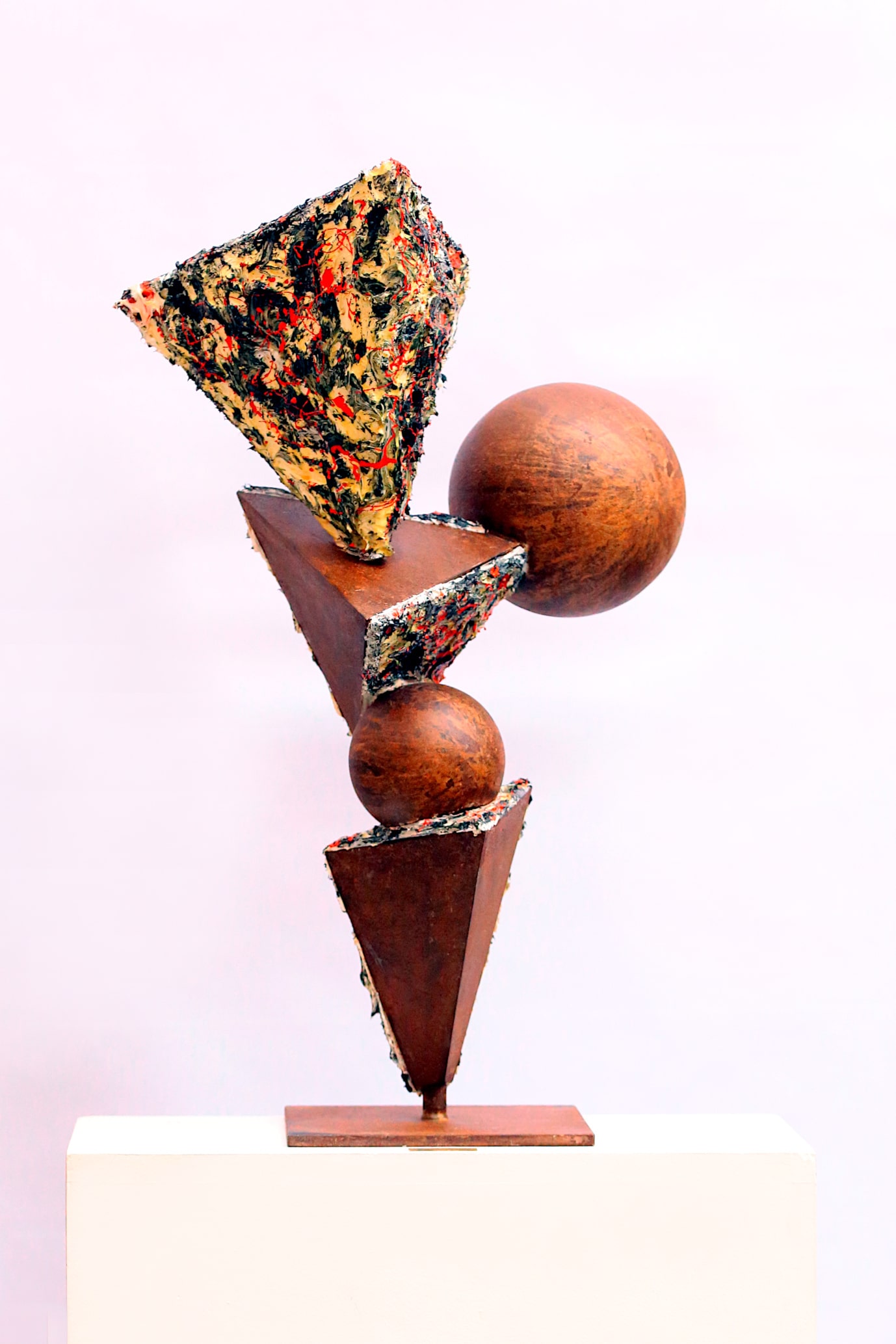
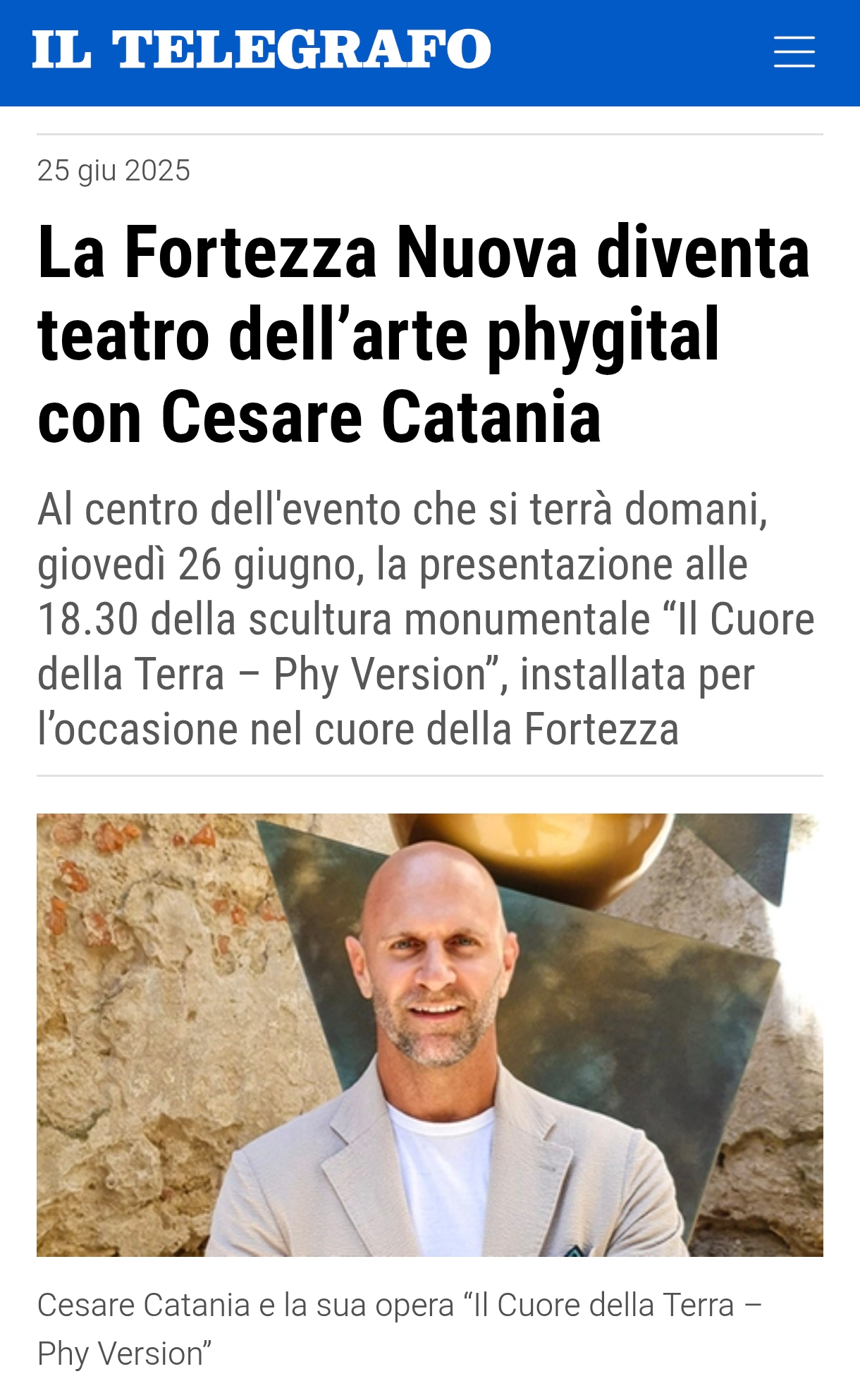
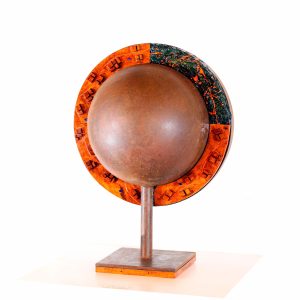
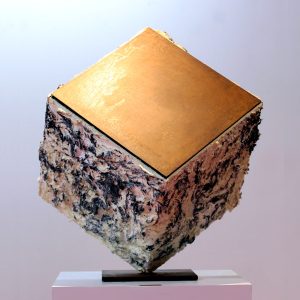
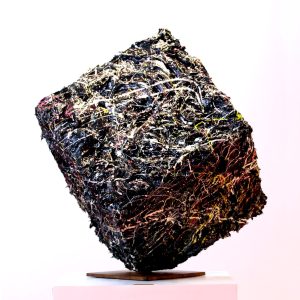
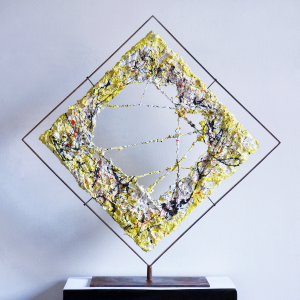
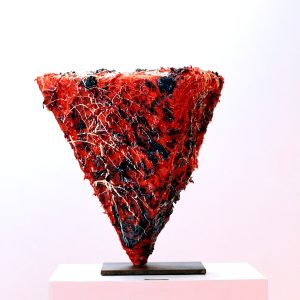
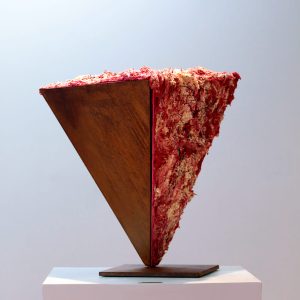
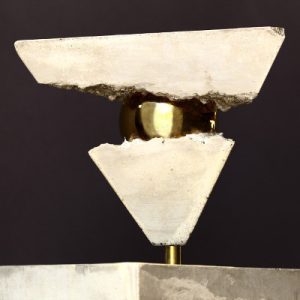
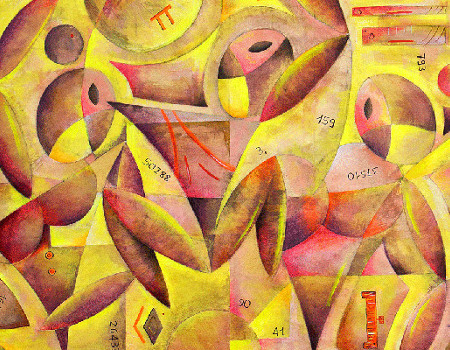
Here too, as in the G Version, spherical and pyramidal solids are composed in space as autonomous entities, each endowed with its own mass, direction, and tension. But it is in their unstable composition—a geometric dance balancing between verticality and imbalance—that a broader poetics takes shape: that of the Earth connecting to the Universe.
Archetypes in dialogue: the tension between sphere and pyramid
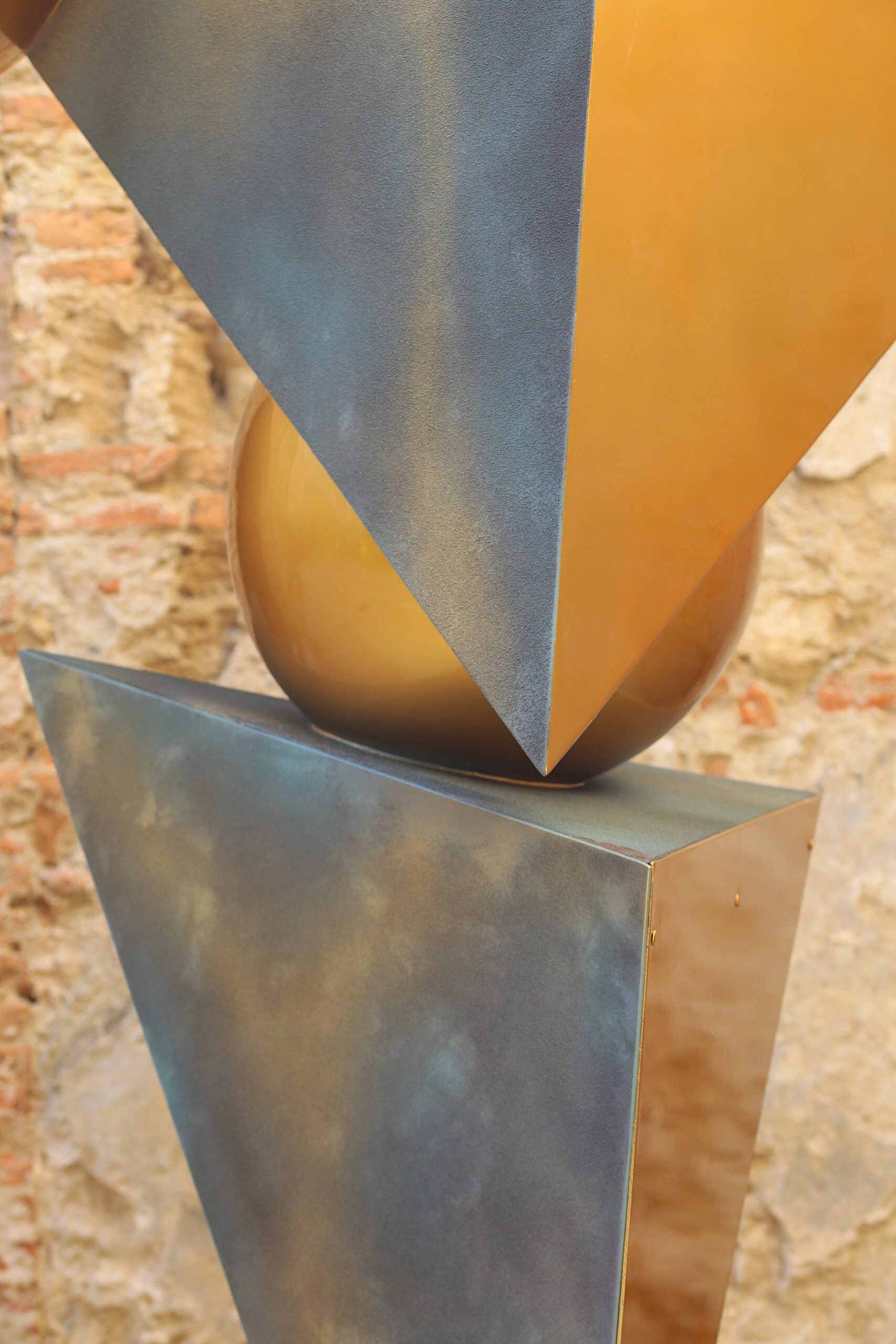
The inverted pyramids, symbols of rationality and grounding, are formally opposed to the spheres, which instead evoke expansion, cyclicity, cosmic freedom. Their visual and structural juxtaposition expresses a harmony made of contrasts, a contained tension that becomes plastic gesture and universal meaning. Here, order and disorder coexist as two sides of the same creative breath.
A surface that reflects and transforms
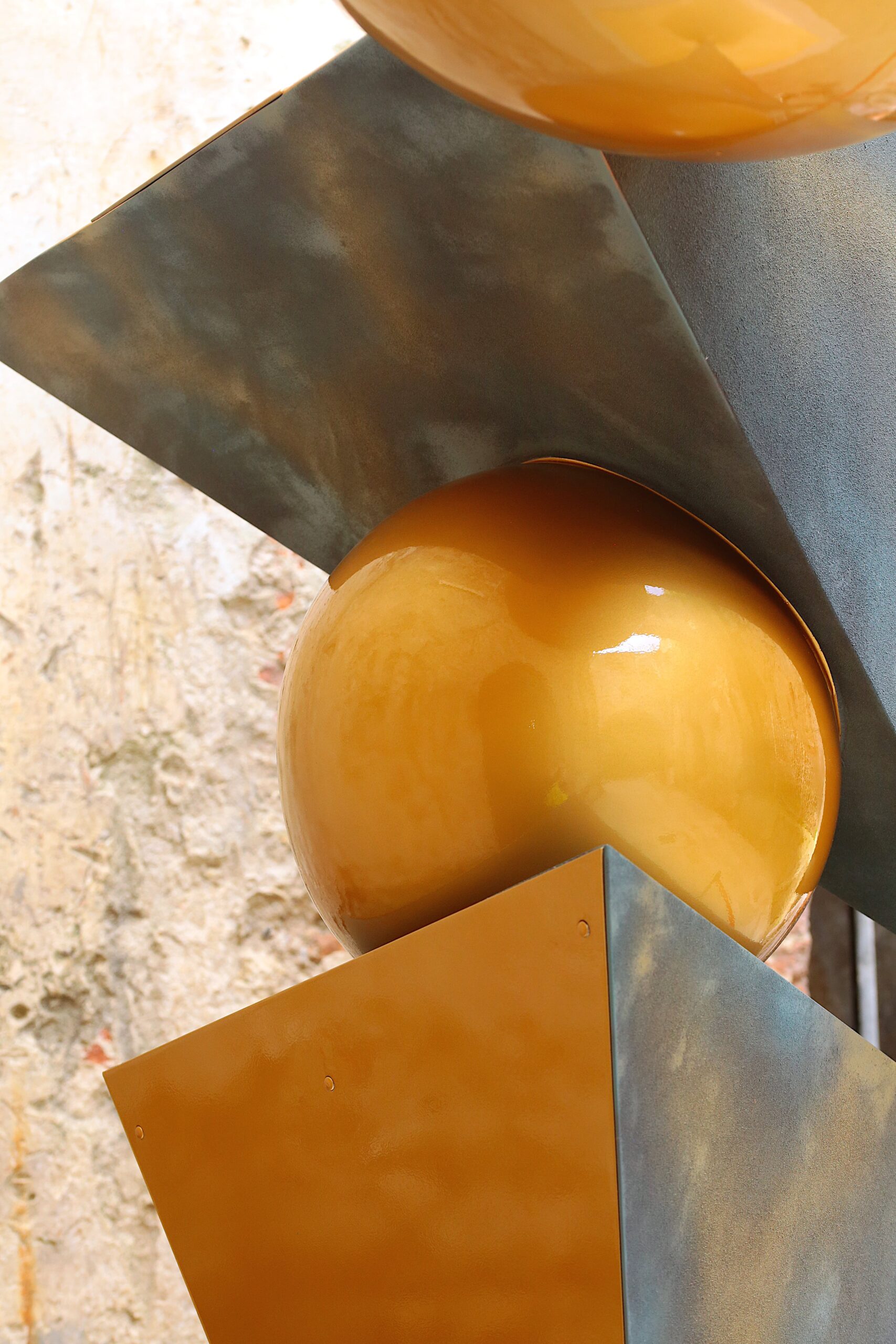
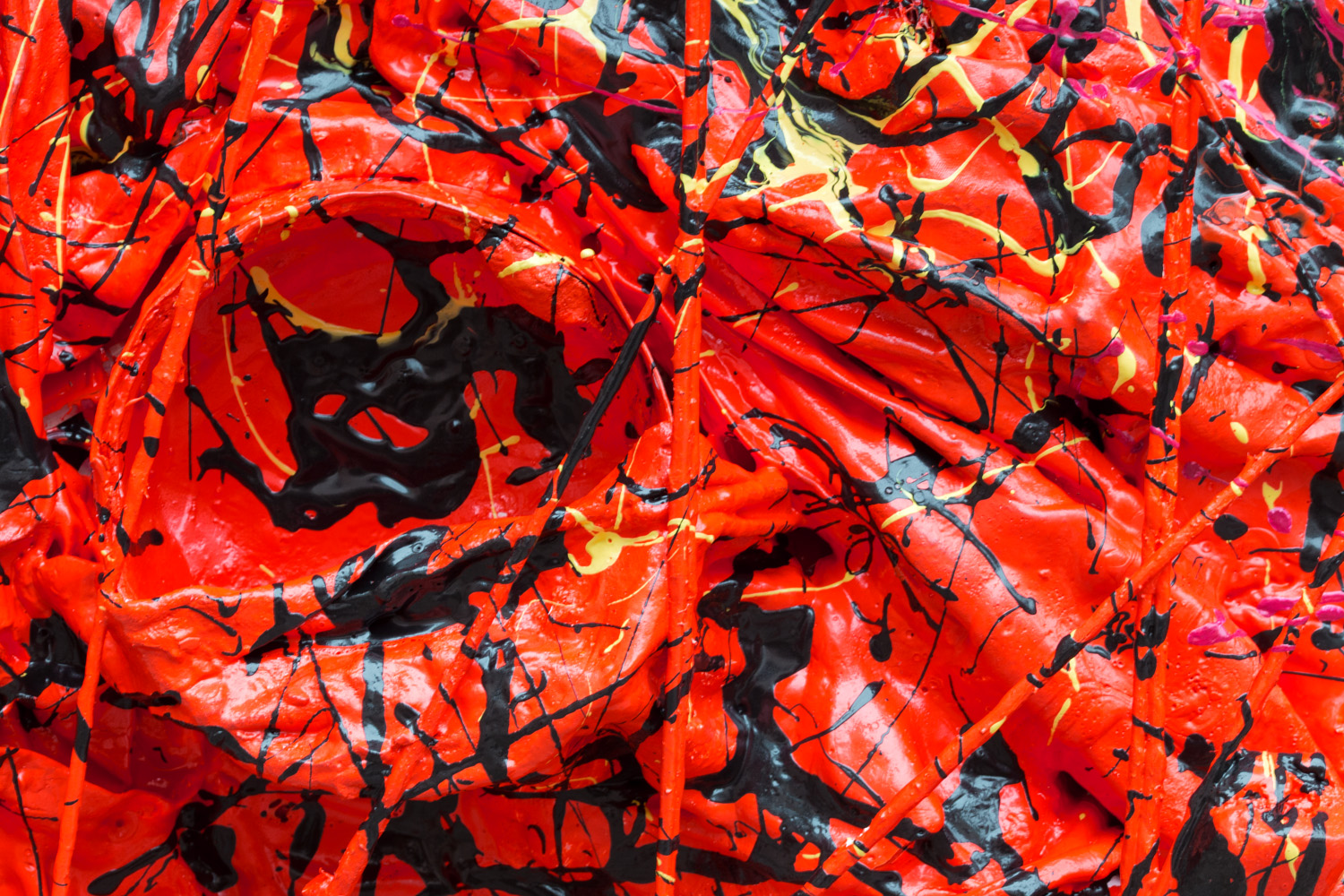
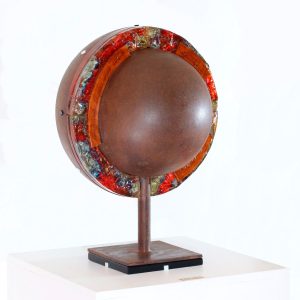
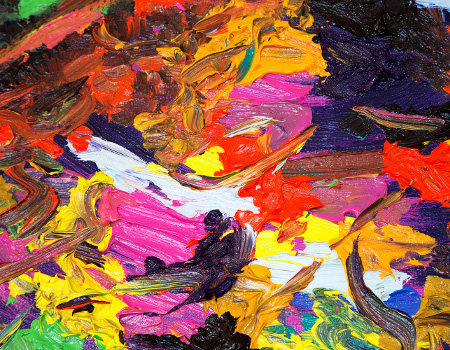
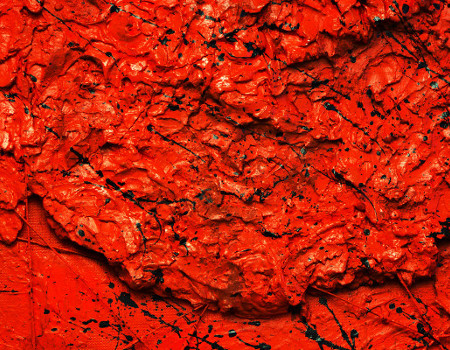
The chromatic surface of the Phy Version is a symphony of iridescent reflections and treated pigments that play with natural light, reacting to changes in the environment. Each face, each plane, each curvature is designed to change, to activate new meanings both in the visible matter and in the digital projection of the work.
The phygital identity as the essence of the work
The augmented reality component, in fact, is not an addition: it is an integral part of the identity of the work, a narrative and visual emanation that completes its physical form.
A new language between art, technology and contemplation
The result is an immersive and meditative work at the same time, in which the encounter between art and technology is not an effect, but a language. And in this new language, once again, Cesare Catania unites opposites: mass and absence, root and sky, tangible and imagined.